Meet Your Executive Board: Mike Mortensen
Mike Mortensen applied to work at his local Veterans Affairs office five times before he finally got the job.
It wasn’t that he disliked law enforcement. He loved that work. But years earlier, while recovering from injuries sustained in Iraq, Mike had turned to a county Veteran Service Officer for help. The experience stayed with him, and eventually changed the direction of his career.
Today, as Deputy Director of Polk County Veterans Affairs in Iowa and a newly elected member of NACVSO’s Executive Board, Mike says he gets paid to do what he would gladly do for free: take care of his fellow veterans.
Over the course of our conversation, it quickly became clear that Mike is not someone who waits for a problem to solve itself. Whether he is connecting veterans with law enforcement before a situation escalates, helping families find a warm coat during an Iowa winter, or making sure groceries get into their hands, he is always looking for another way to help. And behind much of that work are experiences from his own life.
The Experience That Changed the Work
Mike grew up in Des Moines in a family rooted in military service and law enforcement. He knew early on that he wanted to follow both paths. He entered the Army, initially serving in infantry on a convoy security and reconnaissance team supporting combat engineers. His first deployment lasted 18 months. Later, he moved into detention operations in the Army Reserve, with assignments in Iraq and at Guantanamo Bay.
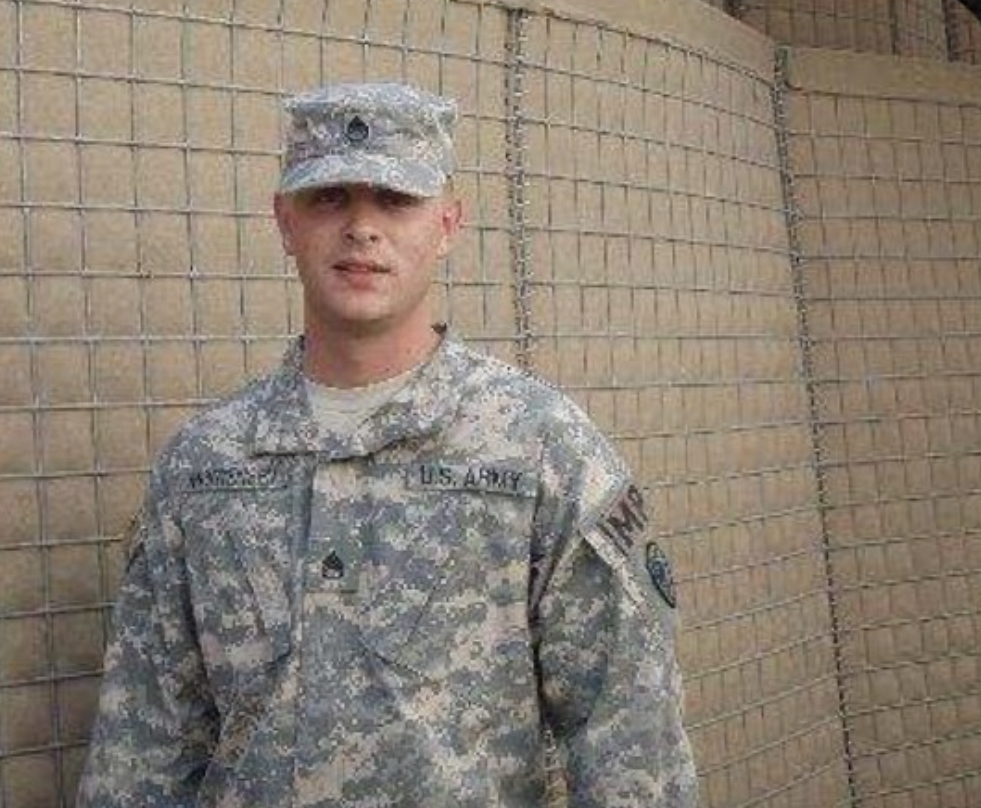
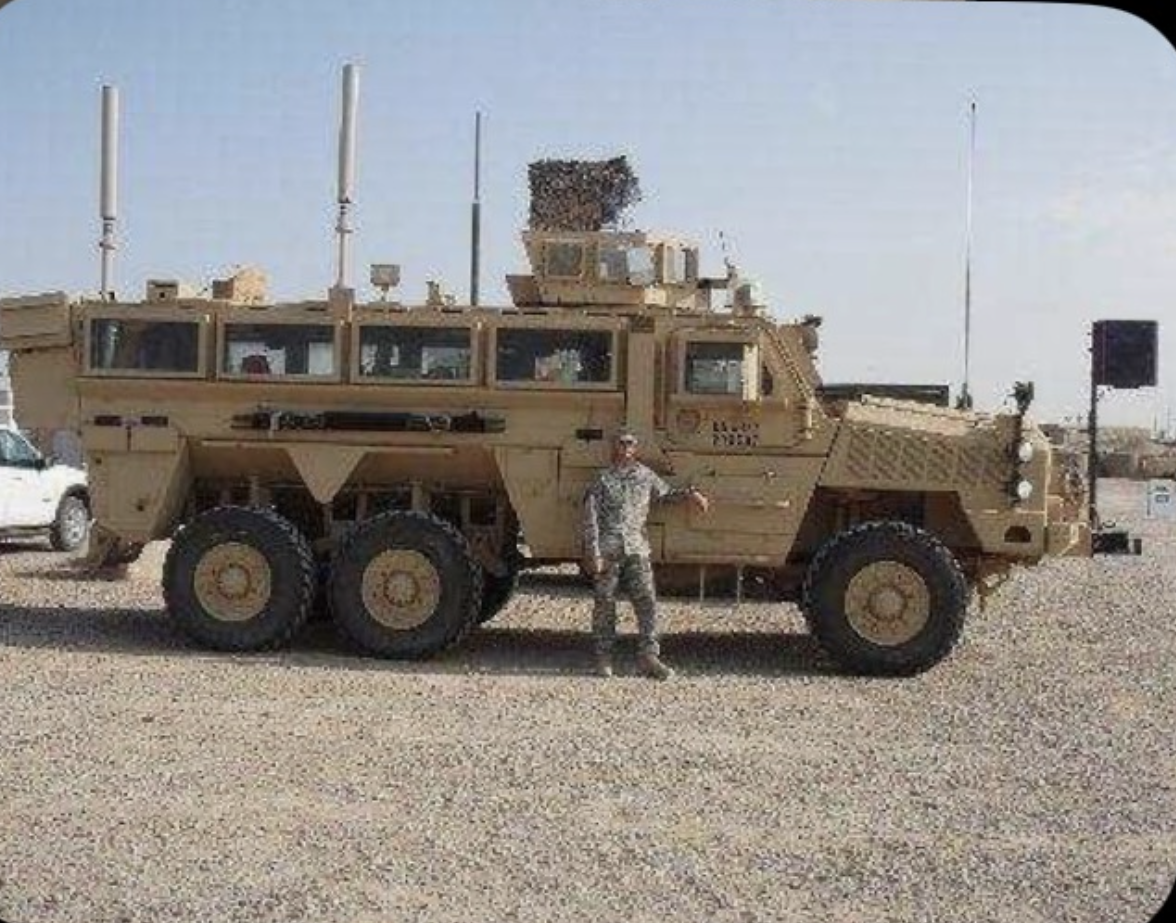
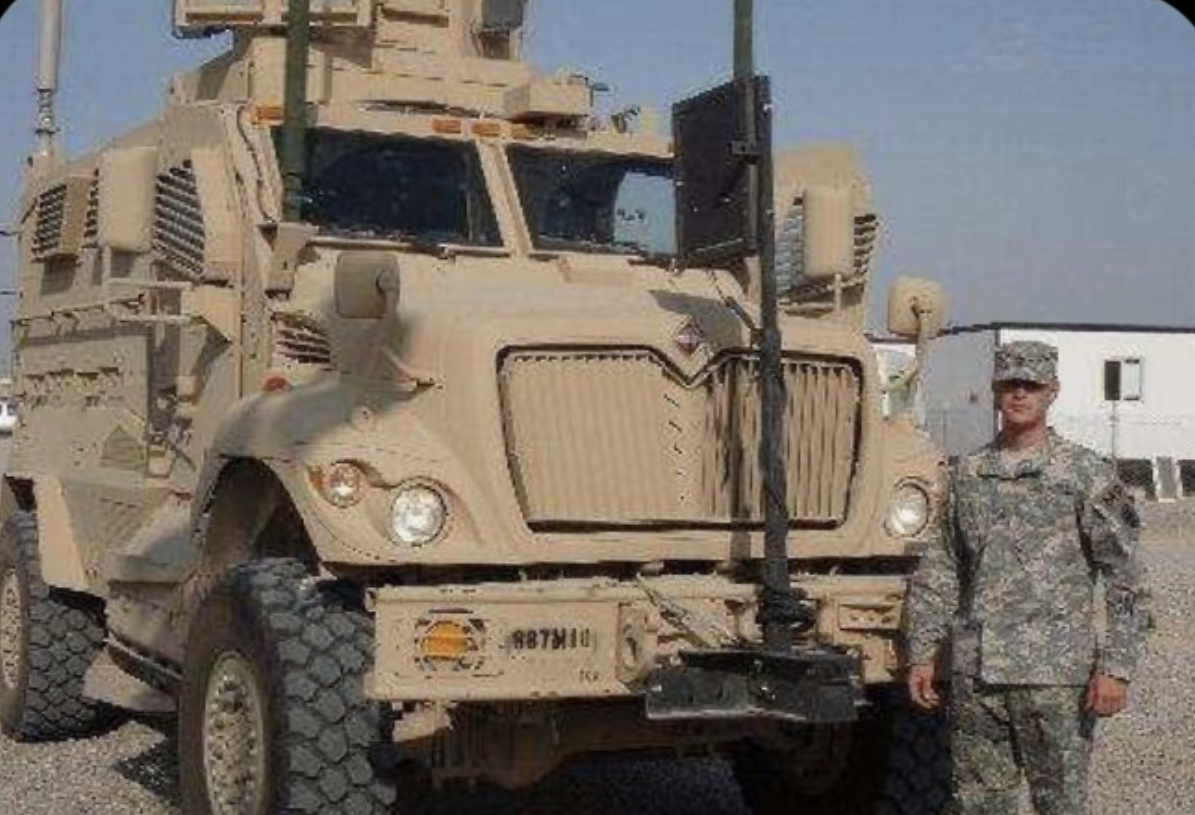
During his service in Iraq, Mike was injured and underwent emergency surgery before being transferred stateside for further treatment, including at Walter Reed and Bethesda and eventually the VA in Des Moines. Recovery was difficult. He was struggling physically and mentally, and an error interrupted his military pay. When someone suggested that he visit his county Veteran Service Officer, he hoped to find some guidance.
Instead, Mike recalls leaving that office feeling that he had been turned away at one of the lowest points in his life. It was a painful experience, but he says it brought him back to a principle he had learned as a noncommissioned officer: you take care of your people.
“If one of my soldiers would have walked in needing that help, I would have been there,” he recalled during our conversation.
He went on to work in law enforcement at the Polk County Sheriff’s Office, but he kept applying whenever a position opened in the county Veterans Affairs office. After five attempts, he got in. The experience that first made him feel unsupported now informs how he approaches every veteran who walks through the door.
“I make it my goal every single day that I will be that person for at least one person,” he says.
Reaching Veterans Before a Crisis Gets Worse
Mike’s law enforcement background has become one of his greatest assets as a VSO. In Polk County, he saw opportunities to connect the Veterans Affairs office with the people who encounter veterans in difficult moments: patrol officers, jail staff, probation officers, judges, and Veterans Justice Outreach partners.
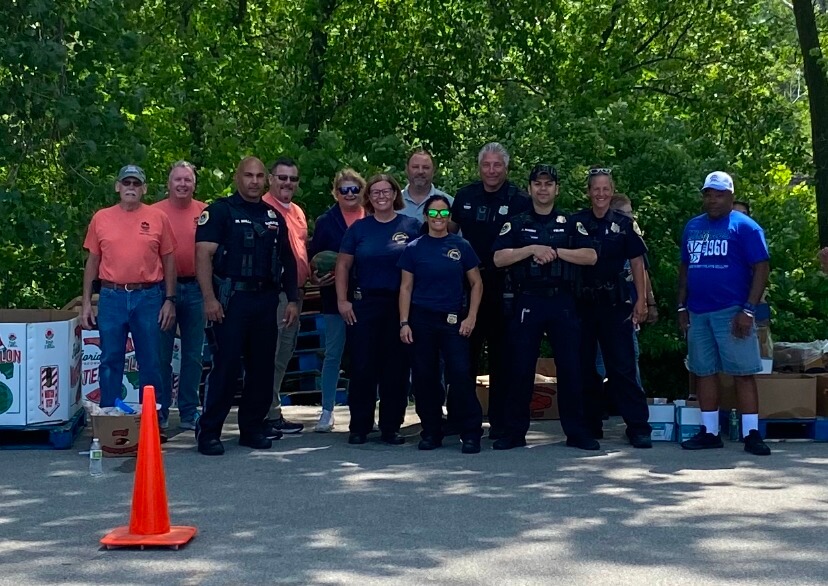
Nothing like the local program he envisioned was in place, so he and his team built one using relationships and resources that already existed. His office receives information about veterans entering the county jail, allowing staff to reach out and identify potential needs. Officers and other justice-system partners also contact the team directly, sometimes before an arrest or court appearance, to help connect a veteran with health care, housing, benefits, or other support.
“We created our own program internally,” Mike explains. “Literally with no additional funding,” using systems already in place.
He says the approach has contributed to an almost 60 percent decline in veterans entering the local jail system. For Mike, however, the most meaningful result is the chance to change the course of someone’s life before circumstances get worse.
“We’ve been able to change people’s lives,” he says.
Of all the initiatives his office has developed, he identifies this one as a particular source of pride.
A Winter Coat, a Food Pantry, and the Details That Matter
Some of Mike’s other initiatives can be traced even further back. Growing up, his family did not have much money. He remembers walking a couple of miles to school during an Iowa winter without a coat that properly fit. He has never forgotten how cold he was.
Years later, that memory helped inspire Polk County’s winter coat program, now in its eighth year at the time of our conversation. Veterans and their families who need coats can receive them through the county’s giveaway. It is a straightforward idea rooted in something Mike understands personally: the difference a warm coat can make.
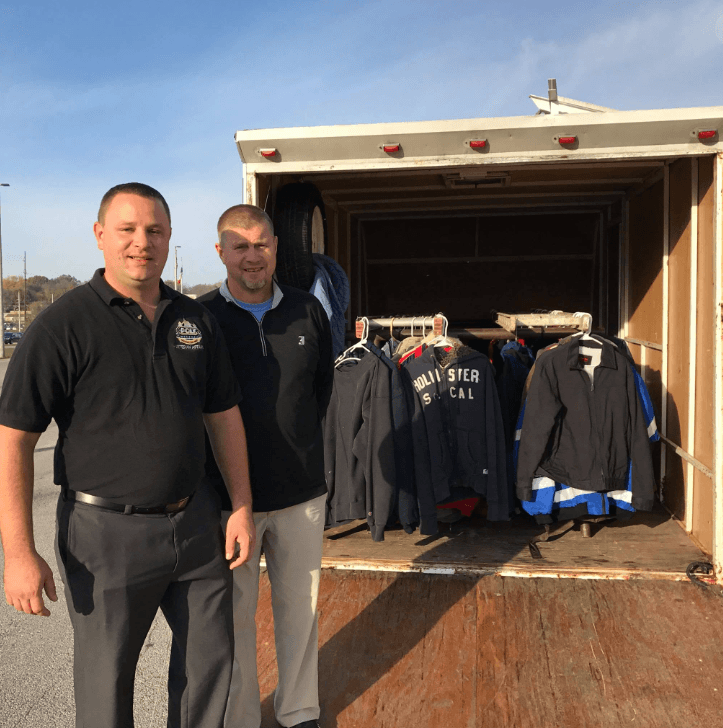
Food is another need he remembers from childhood. During the pandemic, his office partnered with the Food Bank of Iowa to establish a mobile pantry for veterans. On the second Tuesday of each month, families drive through the office parking lot and staff load food directly into their vehicles. Mike says the program serves roughly 375 households a month.
There is a personal side to those visits, too. Staff have an opportunity to shake hands, catch up with the veterans coming through, and even hand out treats to the dogs riding along. As Mike describes it, those few moments of conversation may be the only meaningful interaction someone has that day.
Housing is another persistent challenge. Mike and his team cultivate relationships with local landlords so they can respond when a unit becomes available or intervene when a veteran is having trouble making rent. The goal, once again, is to bring people together before a manageable issue becomes a crisis.
His instinct is to ask what can be accomplished with the people and resources already at hand, rather than assuming every new idea requires a new budget.
“What’s the worst they’re going to tell you is no?” he asks.
Learning How Not to Lead
Mike’s view of leadership has also been shaped by the examples he encountered along the way, including some he would rather not repeat.
“I think I probably had more bad leaders than good leaders,” he says.
As a young soldier, he advanced from E1 to E5 in 18 months, taking on responsibility for others quickly. Those early experiences forced him to think about what he would do differently when people depended on him.
Today, he is reluctant to describe himself as a great leader. He would rather talk about assembling the right team, listening to people who know more than he does, and working toward a solution together.
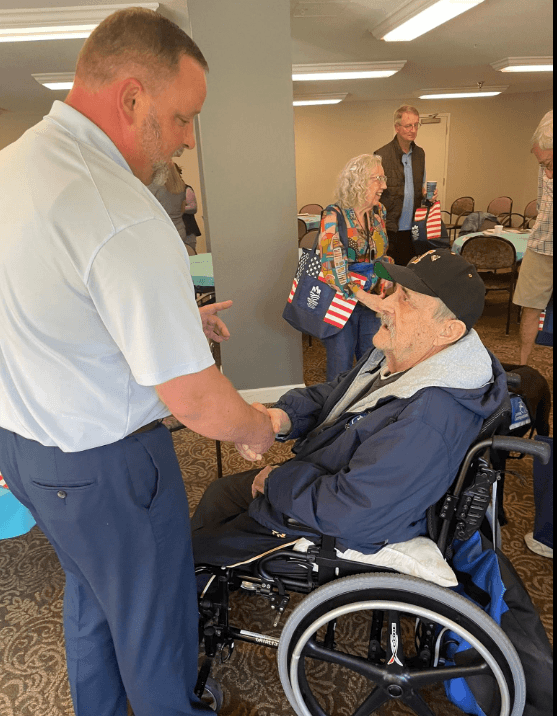
2026 providing information around Veteran benefits.
“I would not say I’m a great leader, but I can do a hell of a job of collaborating.”
That collaborative approach is visible beyond the Veterans Affairs office. Mike also serves on his local school board, where he says his priorities include student access to food and stronger connections among schools, law enforcement, and veterans.
From Iowa to NACVSO
Mike first came to NACVSO for accreditation, but he quickly became involved with Iowa’s state association. He progressed from sergeant at arms to president, served two terms leading the association through the pandemic, and continues working as its legislative liaison.
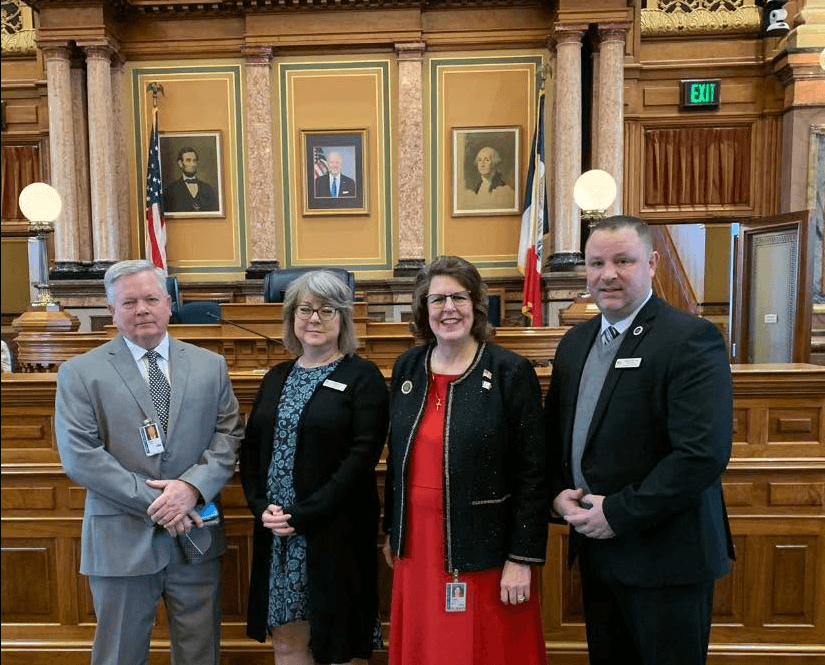
Veterans Service Officer Chris Oliver, and Iowa State Representative
Mark Thompson during Veterans Day on the Hill in January 2023.
He also knows that collaboration is not always easy. Years before joining the national Executive Board, Mike and other state leaders challenged proposed organizational changes that they believed had not received enough discussion among state associations. He views the stronger dialogue between delegates and national leadership that followed as a positive development.
“You understand those concerns that are coming from the states and you listen to different perspectives before you just kick out a policy,” he explains.
Making Room at the Table
As one of NACVSO’s newest Executive Board members, Mike is not arriving with a lengthy list of instructions. His first priority, he says, is to listen, take notes, and understand the work already underway.
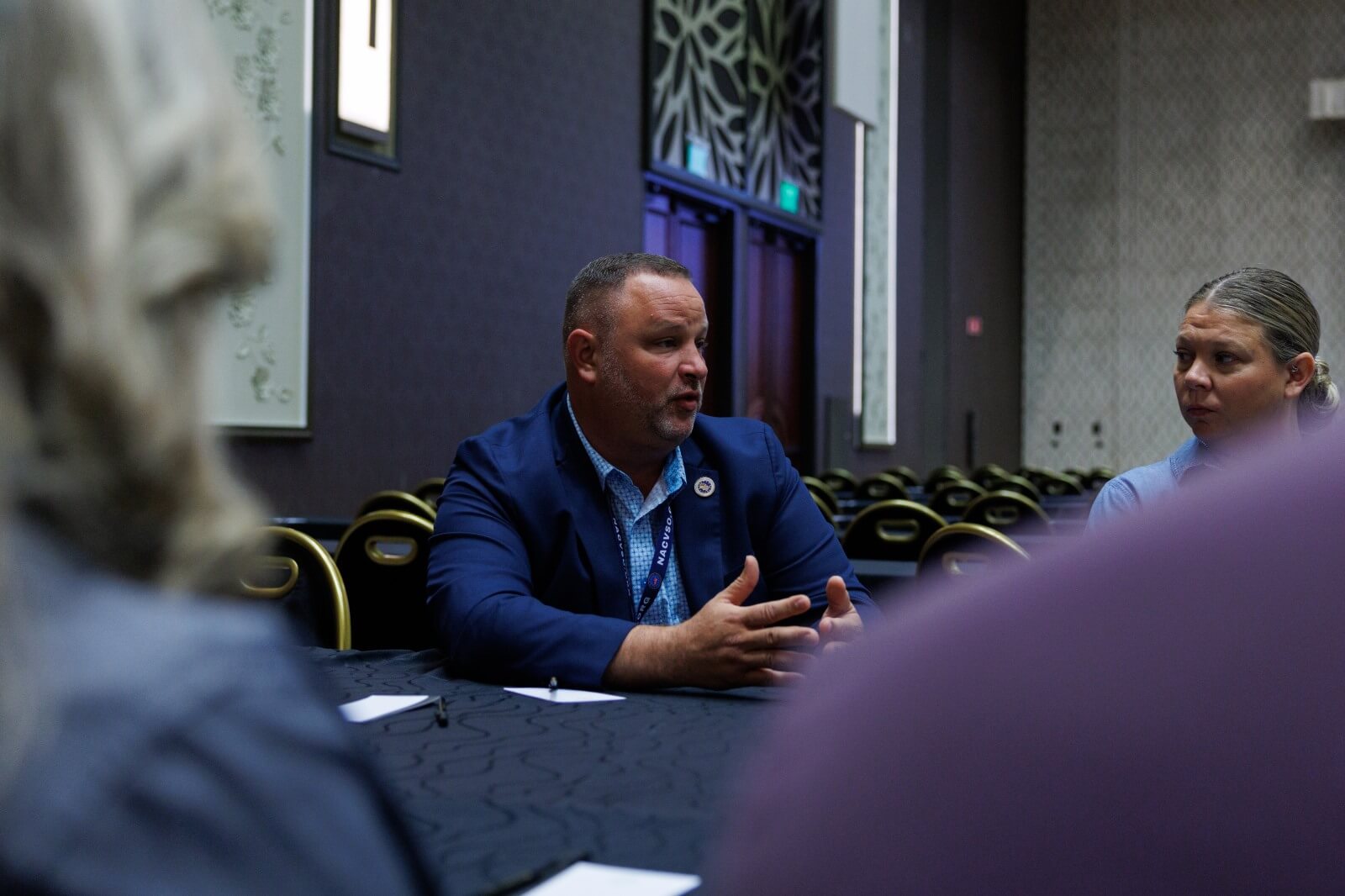
Paul R. Lawrence, Ph.D during the 2026 NACVSO Conference
One opportunity he does see is extending NACVSO’s reach into states and U.S. territories that have little or no representation in the organization. To him, a stronger national voice starts with including more of the people NACVSO seeks to represent.
“If we’re going to be up at the table up there in D.C., I don’t want to leave anybody behind.”
Mud on His Boots
Near the end of our conversation, we asked Mike what he most wanted fellow NACVSO members to know about him. His answer returned to the principle that has guided him through every chapter of his career: he wants to remain approachable and involved, no matter what title he holds.
“I will always be a leader that’s got mud on their boots,” he says. “It’s the only way that I know how to be a leader and to have a team, is to be there pulling on the same rope.”
Even as Deputy Director, his calendar is still filled with appointments with veterans. He has no intention of giving up that face-to-face work, and he wants other VSOs to know they can count on the same willingness to help.
The man who once walked into a VSO office needing someone in his corner now makes it his work to be that person for others. And he wants NACVSO members to know that commitment extends to them, too.
“If you need help, if you need somebody to give you guidance, if you just need somebody to listen, I’m the guy. I got you.”