Meet Your Executive Board: Reginald “Reggie” Simms
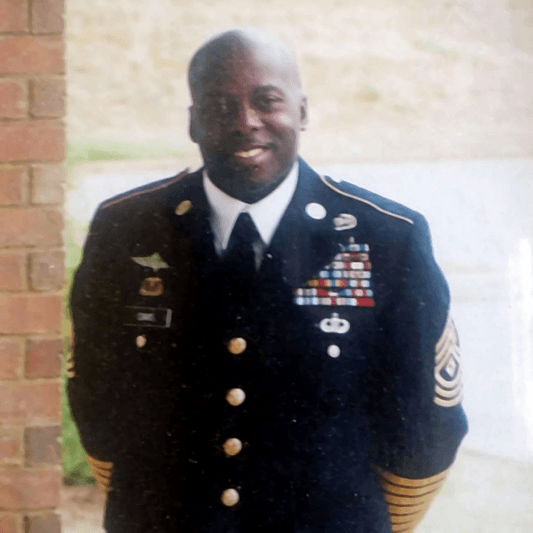
Twenty-eight years in the U.S. Army's 10th Special Forces Group. Eight combat deployments. And, by his own count, barely a year off before he was back to work, first as a Tennessee Veteran Service Officer, and eventually as a member of NACVSO's executive board. Reginald Simms—Reggie to everyone who knows him—is the first profile in NACVSO's Meet the E-Board series, and after spending an hour with him, it's not hard to see why we started here. He doesn't chase credit, and he'd rather talk about the veterans he's helped than himself, which made getting his story so much fun.
From Military Service to Service Officer
Reggie retired from the Army on September 30, 2012, and was working as a Tennessee Veteran Service Officer by March of the following year, barely a pause between the uniform and the caseload. He didn't stay new for long. Once he'd finished his own training, Tennessee's commissioner made him State Trainer, responsible for training every incoming VSO in the state. One of the officers he trained early on was a young lieutenant named Tommy Baker, now a four-star general and Tennessee's State Commissioner. That's the kind of leader Reggie has consistently been: someone who gets people up to speed and sets them up to succeed. Today, as a member of NACVSO's executive board, he's doing the same thing, just at a national level.
“I was a Tennessee State VSO. Once I got through with training, the commissioner made me the state trainer.”
It was around this time that Reggie's friend Alex Jones first pulled him into NACVSO. “He's like, ‘Hey, we got CVSO, you need to join us,’” Reggie remembers. “He told me, ‘It's a great organization. You're working over here with me, so you're going.’ Okay, no, I'll go. I'll do it.” His first NACVSO conference was in Myrtle Beach, South Carolina, and marked the start of his involvement with the organization, which has now spanned well over a decade.
A Lesson That Stuck
Some of Reggie's clearest leadership instincts trace back to a single night, late in his Army career. As a newly minted First Sergeant, he'd fallen into the habit of staying at the office well past hours, determined to get everything done himself. One night, his sergeant major caught him at it.
“He told me, 'You either got one of two problems: you either don't know how to manage time, or you don't know how to manage people. Which one is it? You have people. You need to go home.'”
It's a lesson Reggie still applies today. As a VSO, he sees six to eight veterans a day in his Madison County office. “I could probably see a lot more,” he says, “but are you actually giving them the attention they need by doing 10 or 20 a day? No, you're not. So if you space it out, you get better results,” by taking the time to learn more about each of his veterans.
The Person in Front of You
For Reggie, it’s simple: “The person in front of you is the most important person at that time. You owe them everything to try to help them with this claim.” It's a standard he holds the volunteers at his own outreach events to as well, particularly an event he's hosted every year for over a decade. The event is usually held the month before Veterans Day, drawing 100 to 150 veterans for free food, on-site claims processing, and support from local police, state and county VSOs, and community partners. “We don't give out paperwork and say, ‘Hey, fill this out and bring it back to me,’” he says. “No. Your job as the VSO is to do it for them. If you can't do that, I don't want you down here.”
Keeping his office running takes its own kind of advocacy. Each year, Reggie makes the case for his budget directly to the Madison County Commission—a body where, by his estimate, 90% of members aren't veterans. His approach is straightforward: show up with the numbers. “I get a report that shows what I've done from last year to this year,” he says. “I tell them, if I could bring in this much money and I'm asking you for this to fund my office, that shouldn't be an issue. I'm not giving it to you from the hip—I'm giving you the numbers.”
No Veteran Left Behind
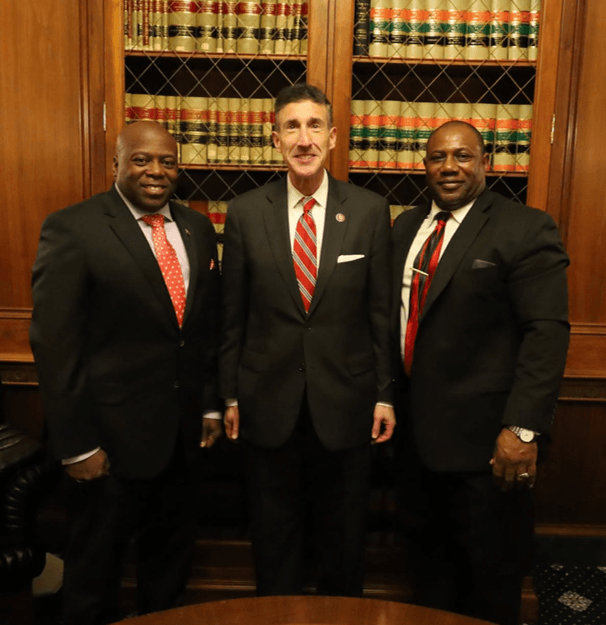
When Reggie noticed rural veterans in West Tennessee struggling to get to their appointments, he raised the issue directly with the governor at a roundtable. The result was a partnership with a local nonprofit that now runs buses to and from rural veterans, along with a vehicle donated by his local sheriff's office for the same purpose. Both have grown since they started. Again, Reggie keeps it simple:
“If you can't get them there, somebody will.”
Finding His Way to the Board
Reggie didn't initially set out to be on NACVSO's executive board. “Before I became a board member, I didn't have any doubts about the leadership and direction it was going,” he says. “Sometimes I thought about the role of some people on it—if it was the right person,” but he always trusted that the direction and mission of the organization would do the right thing. It was a handful of fellow Tennessee members who eventually talked him into running. “They started saying, ‘Hey, you need to consider trying—at least throw your hat in there and you can make a difference.’”
He was elected, and something changed almost immediately: members started calling him.
“People started reaching out to me and I would ask questions, send stuff up to the president and second vice and first vice, and get responses back. I'm the type of person, if you ask me a question, I'm gonna answer. I'll try to get it for you and run it up the chain.”
Like every member of NACVSO's executive board, Reggie is a volunteer and works alongside the caseload in his own office. It's a detail worth repeating: the same person fielding board business on a given week might also be seeing a dozen veterans that day.
The Role of Delegates
These days, one of Reggie's biggest priorities is delegate engagement. An NACVSO delegate himself before joining the board, he recalls not always feeling reached or engaged. “If you're the delegate, you're the person that people are trying to get the information from,” he says. “If you're just sitting back and not wanting to do anything, then how do you expect your people to?” It's a philosophy he traces back to his time in uniform: “I always used the philosophy when I was in the military — I'm the leader, I do, and I expect you to. I'm up front leading, and I want you to do it with me.”
Always Humble
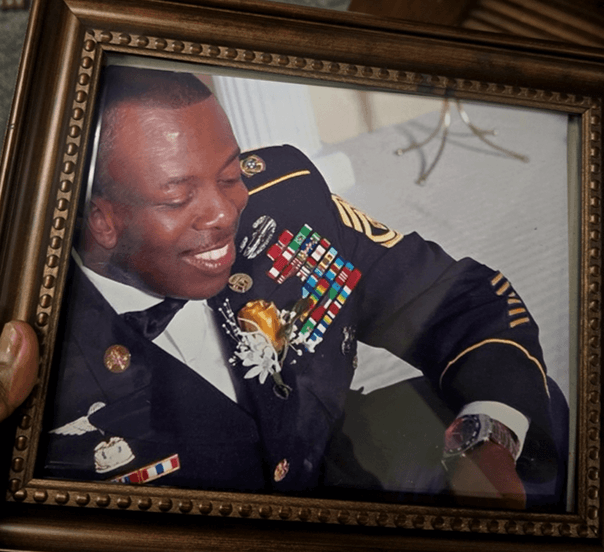
Ask around, and one thing comes up again and again about Reggie: he'd rather the attention go anywhere but toward him. “I don't like to spotlight on a lot of things,” he admits. “You could probably tell when I got the [Ann Knowles] award, I was kind of lost for words. My thing is, it's all about the organization.” He's been involved with other veteran service organizations over the years—the VFW, the American Legion, the DAV—and says he's never seen the level of engagement NACVSO has. It's part of why, after everything, he keeps showing up.
“I love the organization. I love the direction it's going in. I love the people that I'm working with. So I love it.”